
Meet CisionOne
The all-new, AI-powered PR platform that works hard,
so you can work smart.
Get ready to transform the way you and your team work.

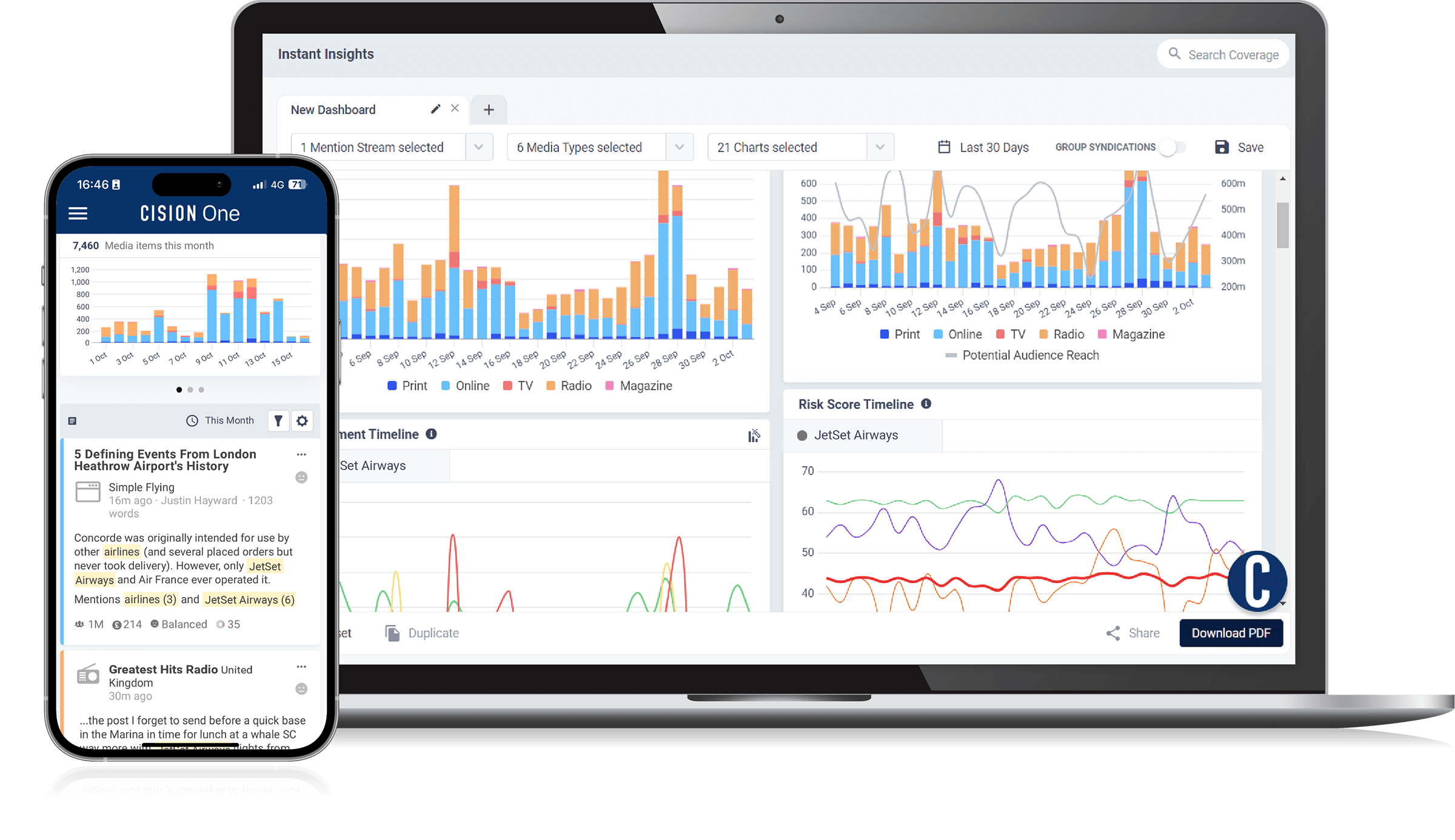
Turn Campaign Fragmentation into Coordination
Make intelligent, real-time decisions to orchestrate your communication strategy in a unified way across earned, paid and owned channels.
learn more Gorkana's full suite of media intelligence solutions
Media Database
Ours is the biggest, most thoroughly researched and accurate media database in the UK trusted by thousands of communications professionals.
Monitoring
We monitor the most comprehensive list of global media across all channels which our talented editors filter so that it's strictly relevant to you.
Social Media
Track, monitor and interact with all the conversations that matter to you with our blend of smart technology and human-driven insight.
Analysis
Our talented consultants work closely with you to design a bespoke analysis programme to cut through the noise to measure what matters.
Surveys
Our cost-effective, micro-survey solution enables users to create and conduct short surveys and receive results within minutes.
Register For An Event
We host regular media briefings, networking and thought leadership events, seen one you like the look of – register today.
Latest Jobs
We list hundreds of fantastic journalist and PR jobs every day, so have a look for your next exciting role.
What Our Clients Say
Don’t take our word for it. See what our customers have to say about our products, people and services.


Opinion: How challenger agencies can compete with the big agency networks
Barbara Bates, global CEO at Hotwire, highlights the key areas where challenger agencies can go the extra mile to compete with their larger counterparts. For a long time in [...]

60 Seconds with The Academy co-founder Mitch Kaye
Mitch Kaye, co-founder of The Academy, reveals why he and Dan Glover started their second agency, how the pair work together and his love of AFC Bournemouth. What made you [...]

Simon Strand – winner of the 2018 Swedish Cision PR Influencer Award
Simon Strand is Sweden’s most influential PR consultant in digital channels and was awarded the Cision PR Influencer Award 2018 at the Spinn gala in Stockholm last week, [...]

Discover how PR can move from evolution to revolution
At CommsCon earlier this month, we heard a range of fantastic speakers articulate their view of what comms professionals can do to improve their output. They encouraged their [...]

Opinion: Why “PR” is having a renaissance
Brendon Craigie, co-founder and managing partner at Tyto PR, examines why PR professionals are once again adopting the PR moniker. The public relations industry is in the [...]

